Ben Crenshaw
For years, a pervasive myth has kept talented professionals locked out of one of the fastest-growing, highest-paying industries in the global economy. The myth goes like this: If you cannot write complex Python scripts, reverse-engineer malware in assembly, or configure enterprise core routers, you do not belong in cybersecurity.
As the Principal Defensive Cybersecurity Instructor and Curriculum Architect at Transfotech Academy, I am here to tell you that this assumption is completely wrong.
While the media loves to highlight the lone hacker in a dark room typing lines of code at terminal velocity, the day-to-day reality of enterprise cyber defense is vastly different. Cybersecurity extends far beyond technology; it involves aligning technical measures with business goals, human behavior, corporate policies, and legal frameworks.
In fact, a substantial portion of the cybersecurity landscape- specifically, Governance, Risk, and Compliance (GRC), security awareness training, auditing, and program management- requires no prior background in coding or systems engineering. If you possess strong communication skills, critical thinking, and organizational discipline, you already hold the foundational traits needed to thrive.
Here is your roadmap to understanding, navigating, and launching a lucrative, non-technical career in cybersecurity.
What Are Non-Technical Cybersecurity Roles?
When people hear “cybersecurity,” they usually imagine the technical, tactical layer- the firewalls, intrusion detection systems, and threat-hunting tools. Non-technical cybersecurity operates at the strategic and governance layer.
Non-technical professionals protect organizations not by building software or analyzing network packets, but by setting the rules, managing risk, enforcing regulatory compliance, and training the human workforce.
The Market Demand: Why Non-Technical Roles Are Exploding
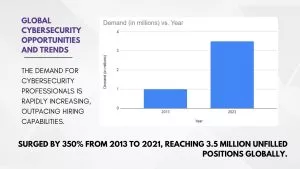
There is a massive global shortage of cybersecurity talent, with millions of positions sitting unfilled worldwide. While technical SOC (Security Operations Center) roles are heavily discussed, GRC and compliance roles account for a massive share of open enterprise positions.
Why? A company can buy the most expensive security tools on the planet, but if it fails an audit, violates data privacy laws like GDPR, or suffers a breach caused by an untrained employee clicking a phishing link, the business faces crippling fines and reputational damage.
Because of this, organizations pay top dollar for professionals who can bridge the gap between technical operations and business strategy.
Defining GRC: Governance, Risk, and Compliance
The heavyweight champion of non-technical cybersecurity is GRC. It sounds like corporate jargon, but breaking it down into its three pillars makes the concepts straightforward:
1. Governance (The Rules)
Governance refers to the high-level structures, policies, and steering practices an organization uses to manage its security program.
- Real-World Example: Writing an Acceptable Use Policy (AUP) that dictates how employees handle corporate laptops, or defining password complexity standards across the enterprise.
2. Risk (The Assessment)
Risk management is the practice of identifying, analyzing, and mitigating potential threats to an organization’s assets before they can cause harm.
- Real-World Example: Evaluating a third-party software vendor before signing a contract to ensure their servers do not expose your company’s customer data (Vendor Risk Management).
3. Compliance (The Enforcement)
Compliance means ensuring that the company adheres to external legal mandates, industry standards, and internal guidelines.
- Real-World Example: Performing a quarterly check to verify that a hospital is strictly complying with HIPAA regulations regarding patient record privacy, or verifying a retailer meets PCI-DSS credit card security standards.
Common Non-Technical Cybersecurity Roles & What They Do
If you enter the cybersecurity market through a non-technical pathway, here are five prominent roles you can target:
1. GRC Specialist / Analyst
- The Role: You act as the bridge between technical teams and executives. You manage risk registers, map security controls against established frameworks (such as the NIST Cybersecurity Framework or ISO 27001), and draft corporate security policies.
- Why It’s Beginner-Friendly: It relies on structured frameworks, logical reasoning, and spreadsheet organization rather than command-line terminals or programming languages.
2. Security Awareness & Training Specialist
- The Role: The human element remains the number one attack vector in cybersecurity. In this role, you design educational campaigns, run simulated phishing tests, and teach employees how to spot social engineering attempts.
- Why It’s Beginner-Friendly: It relies heavily on adult learning principles, communications, marketing, and psychology rather than engineering.
3. Cybersecurity Auditor
- The Role: Auditors assess an organization’s security posture against specific rules and standards. You examine documentation, interview system owners, and verify whether required security controls are actually active.
- Why It’s Beginner-Friendly: Auditing is essentially a systematic checklist-and-inspection process. If you are detail-oriented and methodical, you can excel in auditing.
4. Cybersecurity Project Manager
- The Role: Security teams constantly run complex initiatives such as upgrading firewalls, deploying new multi-factor authentication systems, or implementing new software. You keep these projects on time, within budget, and aligned across departments.
- Why It’s Beginner-Friendly: You do not need to build the technology; you simply need to manage the timeline, deliverables, and communication between stakeholders.
5. Cybersecurity Content Writer / Policy Documentation Specialist
- The Role: Technical engineers are notorious for being unable to write clear, plain-language documentation. Content writers craft clear incident response playbooks, system security plans, and external compliance reports.
- Why It’s Beginner-Friendly: It leverages traditional writing, editing, and research skills to translate complex technology into readable documentation.
Key Transferable Skills You Already Have
If you come from teaching, healthcare, customer service, business administration, hospitality, or the military, you likely already possess the most critical soft skills required for GRC and leadership roles:
- Plain-Language Communication: The ability to explain a technical risk to a business executive or non-tech employee without inducing confusion.
- Project Organization & Attention to Detail: Tracking multiple moving parts, managing documentation, and ensuring deadlines are met.
- Critical Thinking & Risk Spotting: Looking at a business process and asking, “What could go wrong here, and how do we prevent it?”
Entry-Level Certifications Requiring No Technical Background
Certifications are a recognized way to signal value to HR screeners and hiring managers. You do not need a computer science degree to earn foundational credentials.
Category 1: General Foundations
- CompTIA Security+: The baseline credential recognized globally across the public and private sectors. It validates that you understand fundamental security concepts, threats, vulnerabilities, and basic GRC principles.
- ISC2 Certified in Cybersecurity (CC): An entry-level certification designed for complete beginners that covers fundamental security principles, risk management, and network access controls without requiring prior work experience.
Category 2: GRC & Compliance Specifics
- Microsoft SC-900 (Security, Compliance, and Identity Fundamentals): A foundational exam covering cloud compliance, data privacy, and identity management across enterprise cloud ecosystems.
- ISO 27001 Foundation: Validates your understanding of the world’s most recognized information security management system (ISMS) framework.
- OCEG GRCP (Governance, Risk, and Compliance Professional): Demonstrates core competency in integrating governance, risk management, and internal compliance controls across a business.
Category 3: Career-Changer Training Certificates
- Google Cybersecurity Professional Certificate: A self-paced program built for complete beginners to learn foundational security tools, risk management, and documentation basics.
- Certified Security Awareness Practitioner (CSAP): Focuses specifically on culture, human-risk management, and designing corporate training programs.
Bridging the Gap: Real-World Confidence with Transfotech Academy
Self-study and theoretical reading can only take you so far. The biggest obstacle career changers face is proving to a hiring manager that they can actually perform the work on day one.
This is where targeted, practitioner-led education makes the difference.
At Transfotech Academy, our programs are designed by active industry professionals and built on an Outcome-Based Education (OBE) model. Instead of memorizing textbook content, students work through real-world case studies, assess simulated enterprise environments against frameworks such as NIST CSF 2.0 and ISO 27001, create risk registers, and draft actionable security policies.
By pairing fundamental certifications (like CompTIA Security+) with hands-on scenario training, career changers build both an HR-friendly resume and the genuine confidence required to speak the language of business risk in job interviews.
Final Thoughts: Experience Does Not Require Permission
You do not need to spend four years getting an engineering degree, nor do you need to spend nights learning complex programming languages to build a rewarding career in cybersecurity.
The industry desperately needs clear communicators, organized project managers, detail-oriented auditors, and strategic thinkers who can protect organizations from the inside out. If you are ready to pivot into a high-growth, recession-resilient field, the non-technical pathway in GRC and security leadership is open for you.