Transfotech Team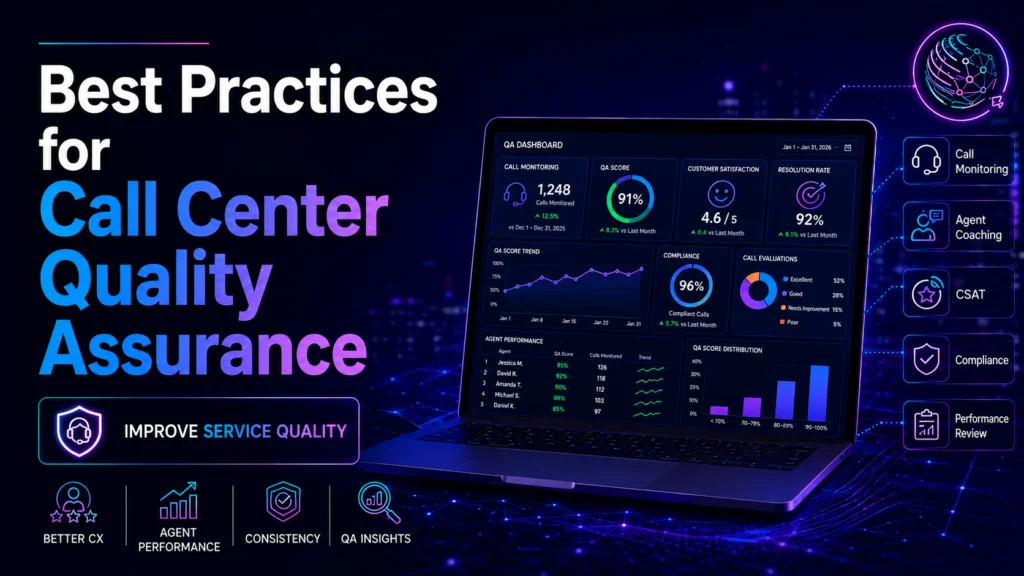
Is your call center consistently delivering high-quality customer experiences or are hidden service gaps quietly damaging your brand? In today’s competitive market, even one poor interaction can reduce customer trust. That’s why Call Center Quality Assurance (QA) is essential.
QA is a structured process that monitors, evaluates, and improves customer interactions. It ensures agents follow quality standards, meet compliance requirements, and deliver professional, empathetic service. Through consistent call monitoring and KPI tracking including CSAT, FCR, and AHT businesses can identify performance gaps, provide targeted coaching, and improve overall customer satisfaction.
Modern QA software enhances this process with AI-powered speech analytics and sentiment tracking, enabling data-driven decisions and proactive improvements.
A strong QA strategy doesn’t just detect problems, it prevents them. While quality control focuses on fixing errors, quality assurance builds systems that reduce mistakes before they happen.
By defining clear standards, offering timely feedback, and aligning QA with training, organizations can create consistent service, confident agents, and loyal customers.
What Is Call Center Quality Assurance?
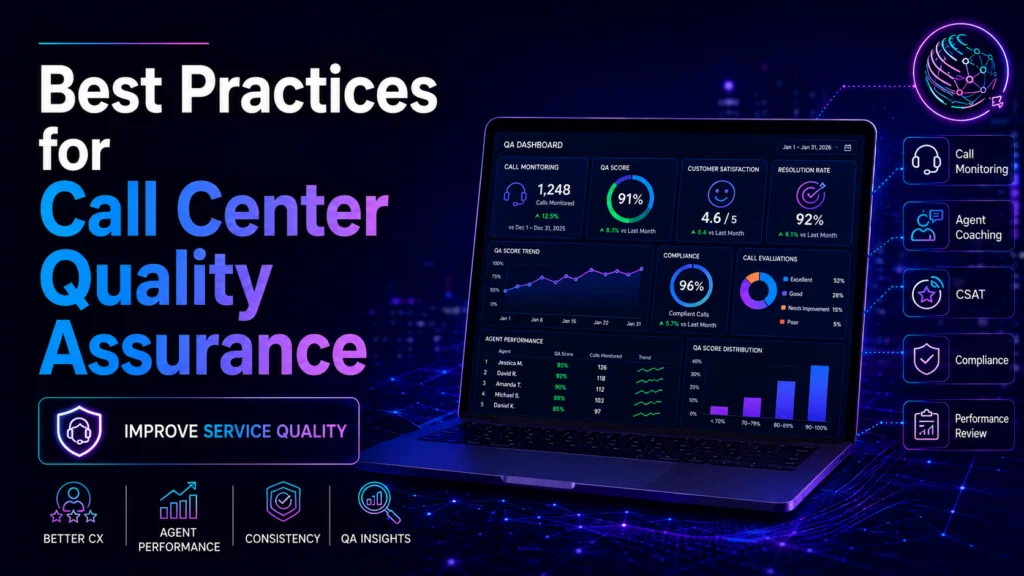
Call center quality assurance is the process of monitoring, evaluating, and improving customer interactions to ensure they meet predefined service standards. It includes reviewing recorded and live calls, measuring key performance indicators, providing structured feedback, and identifying training opportunities.
QA focuses on prevention rather than correction. While quality control identifies mistakes after they happen, quality assurance builds systems that reduce errors before they occur. This proactive approach creates sustainable improvement instead of temporary fixes.
Quality Assurance Tools and Software for 2026
Modern QA relies heavily on intelligent technology. Advanced call center quality assurance software now includes AI-powered speech analytics, automated call scoring, real-time sentiment analysis, compliance alerts, and performance dashboards.
Instead of manually reviewing a small percentage of calls, AI tools can analyze nearly all customer interactions. This provides deeper insights into emotional tone, recurring complaints, script adherence, and escalation triggers. However, technology works best when combined with human coaching. Software provides the data, but managers and team leaders provide the guidance and development support.
Key Performance Indicators for Call Center QA
Effective QA programs rely on meaningful metrics. The most important KPIs include Customer Satisfaction Score (CSAT), First Call Resolution (FCR), Average Handle Time (AHT), quality evaluation scores, compliance rate, Customer Effort Score (CES), and sentiment score.
The goal is not to focus on speed alone. For example, low AHT with poor CSAT often indicates rushed conversations. High CSAT with extremely long call times may signal inefficiency. Balanced performance measurement ensures both quality and operational efficiency.
Training Call Center Agents for Quality
Quality assurance and training must work together. QA insights should directly influence onboarding programs, soft skills development, compliance training, and product knowledge sessions.
Personalized coaching is especially effective. Instead of delivering generic training to all agents, performance data can identify individual improvement areas. Some agents may need empathy training, while others require better product understanding. When training becomes targeted and supportive, improvement happens faster and more sustainably.
Effective QA Strategies for Remote Call Centers
Remote and hybrid call centers are now common. Maintaining quality in a remote environment requires structured systems and clear communication. Cloud-based monitoring tools, real-time dashboards, and regular virtual coaching sessions help maintain consistency.
Managers should prioritize transparent feedback, digital recognition programs, and frequent performance discussions. Remote agents perform best when expectations are clear and support is consistent. Engagement and communication are critical in virtual environments.
Customer Feedback Integration in QA Processes
Customer feedback is one of the most powerful components of quality assurance. Post-call surveys, CSAT forms, Net Promoter Scores, complaint tracking, and online reviews provide valuable insight into real customer experiences.
Integrating this feedback into QA scorecards creates a closed-loop improvement system. If internal evaluations are strong but customer ratings are low, it signals a gap that must be addressed. Continuous feedback analysis ensures that improvements are aligned with actual customer expectations.
Top 10 Call Center Quality Assurance Best Practices
Strong QA systems are built on consistent best practices:
- Define clear quality standards and measurable evaluation metrics.
- Implement consistent call monitoring across different call types.
- Deliver timely and constructive feedback to agents.
- Leverage speech and text analytics for deeper insights.
- Conduct regular QA audits and calibration sessions.
- Incorporate gamification and reward programs to boost motivation.
- Provide comprehensive and data-driven agent training.
- Perform root cause analysis to address systemic issues.
- Track and act on customer sentiment data.
- Integrate QA with ongoing training and professional development programs.
These practices create structure, fairness, and continuous growth within the organization.
AI Powered QA Engineering
Are you ready to step into one of the fastest-growing, high-demand tech careers? Transfotech Academy’s AI Powered QA Engineering Training in New York City is designed to take you from beginner to professional, equipping you with the real-world skills companies are actively hiring for.
This comprehensive online program combines Manual Testing and Automation Testing with advanced tools and frameworks, including Selenium with Java, Cucumber, API Testing with Postman, SQL, CI/CD with Jenkins, Agile/Scrum practices, and DevOps integration. By the end of this course, you will not only understand QA principles but also apply them confidently in live projects, giving you the edge employers seek.
Our training goes beyond theory. You’ll benefit from live interactive classes, recorded sessions to revisit anytime, hands-on projects, personalized resume building, and interview preparation everything designed to ensure you land your dream QA role faster.
Join Transfotech Academy’s online QA training in New York City today and build a career where your skills are in demand, your growth is limitless, and your future in tech begins now
Enroll Now – Start Your QA Career Today
Conclusion
Call center quality assurance in 2026 is a combination of technology, strategy, and human empathy. It is not just about evaluating calls but about building systems that empower agents and improve customer experiences.
Organizations that define clear standards, leverage modern tools, monitor meaningful KPIs, train agents effectively, support remote teams, and integrate customer feedback will create consistent, high-quality service environments. Strong QA programs build trust, strengthen brand reputation, and drive sustainable business success.

![Top qa engineer interview questions [2023]](https://transfotechacademy.com/wp-content/webp-express/webp-images/uploads/2023/04/interview-questions-300x200.png.webp)